



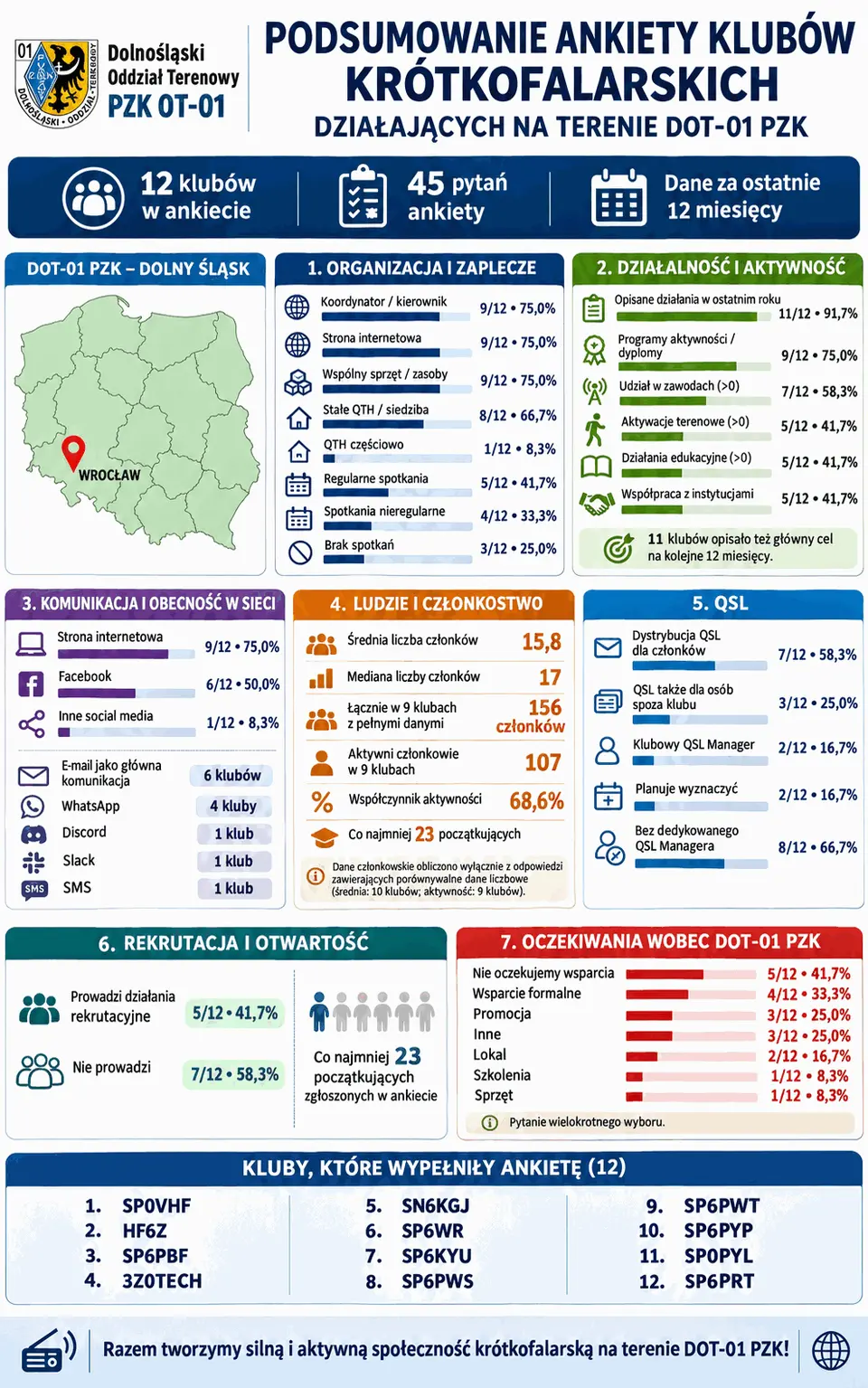
The surveyed clubs represent various areas of amateur radio: from operating and contest participation, through technical construction projects, to educational and community activities. Nine of the 12 clubs indicated that they had participated in activity programs or pursued awards during the past year. Seven declared participation in contests, five in field activations, and five each in educational activities and cooperation with external institutions. Individual types of activity could be mentioned more than once in the responses.
The results also show that formal infrastructure does not always translate into regular in-person activity. Nine clubs have a coordinator or manager, and the same number reported having their own website and shared equipment or resources. Eight clubs indicated that they had a permanent meeting place, while one described it as partial. However, only five clubs hold regular in-person meetings; four meet irregularly, and three do not organize such meetings. The responses mentioned difficulties with premises and restrictions related to installing radio stations and antennas.
The survey also indicated the limited reach of active recruitment: five of the twelve clubs declared that they conducted such activities. Member data was incomplete—ten clubs provided a definite membership figure, while nine submitted complete information on the number of members and active members. The latter group reported a total of 156 members, of whom 107 were classified as active. The authors of the survey noted that the results reflect respondents’ declarations and are not a representative assessment of all clubs in the branch.
The responses included both examples of projects under development and plans related to the basic operation of the clubs. The initiatives mentioned included work on antenna infrastructure, construction training, contest participation, and emergency communications projects. At the same time, some clubs pointed to the need to find premises, improve the regularity of meetings, or rebuild their activity. DOT-01 presented the survey as a starting point for discussions on cooperation between clubs, organizational support, and reaching new people.