


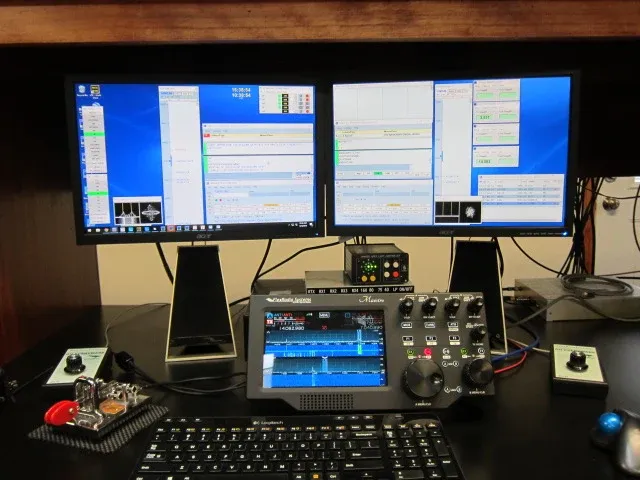
The contest is conducted exclusively using the RTTY mode on five HF bands: 80, 40, 20, 15, and 10 meters, corresponding to 3.5, 7, 14, 21, and 28 MHz. During each contact, operators exchange an RST report and their CQ zone number. Stations in the continental United States and Canada additionally provide a location identifier.
The scoring system primarily rewards international and intercontinental contacts. A QSO between stations on different continents is worth 3 points, a contact between different countries on the same continent is worth 2 points, and a QSO within the same country is worth 1 point. Multipliers are CQ zones, countries, US states, and Canadian areas. Each station may be counted again on a different band.
The rules provide an extensive range of categories for single operators and teams. The available Single Operator classes include High Power, Low Power, and QRP, in both All Band and Single Band formats. The maximum power in the Low Power category is 100 W, while the QRP limit is 5 W. Assisted stations and the Multi-Single, Multi-Two, Multi-Multi, and Multi-Distributed teams are also classified separately.
Additional classes are also available: Classic, Rookie, and Youth. In the Classic category, an operator may operate for a maximum of 24 out of 48 hours and may not use assistance in finding stations. Rookie is intended for operators who obtained their first license less than three years before the contest, while Youth includes operators who are no older than 25 when the contest begins.
Logs must be submitted in Cabrillo format through the organizer's online system. The deadline is short: the log must be submitted within 48 hours of the end of the contest, i.e. no later than September 29, 2026, at 23:59 UTC. Participants who submit their logs on time will be able to download an electronic certificate.
CQ WW RTTY is a great opportunity both for experienced contesters and for operators beginning to work digital modes. Two days of intensive activity on five bands provide an opportunity to make many DX contacts and test the capabilities of your station under heavy band congestion.