


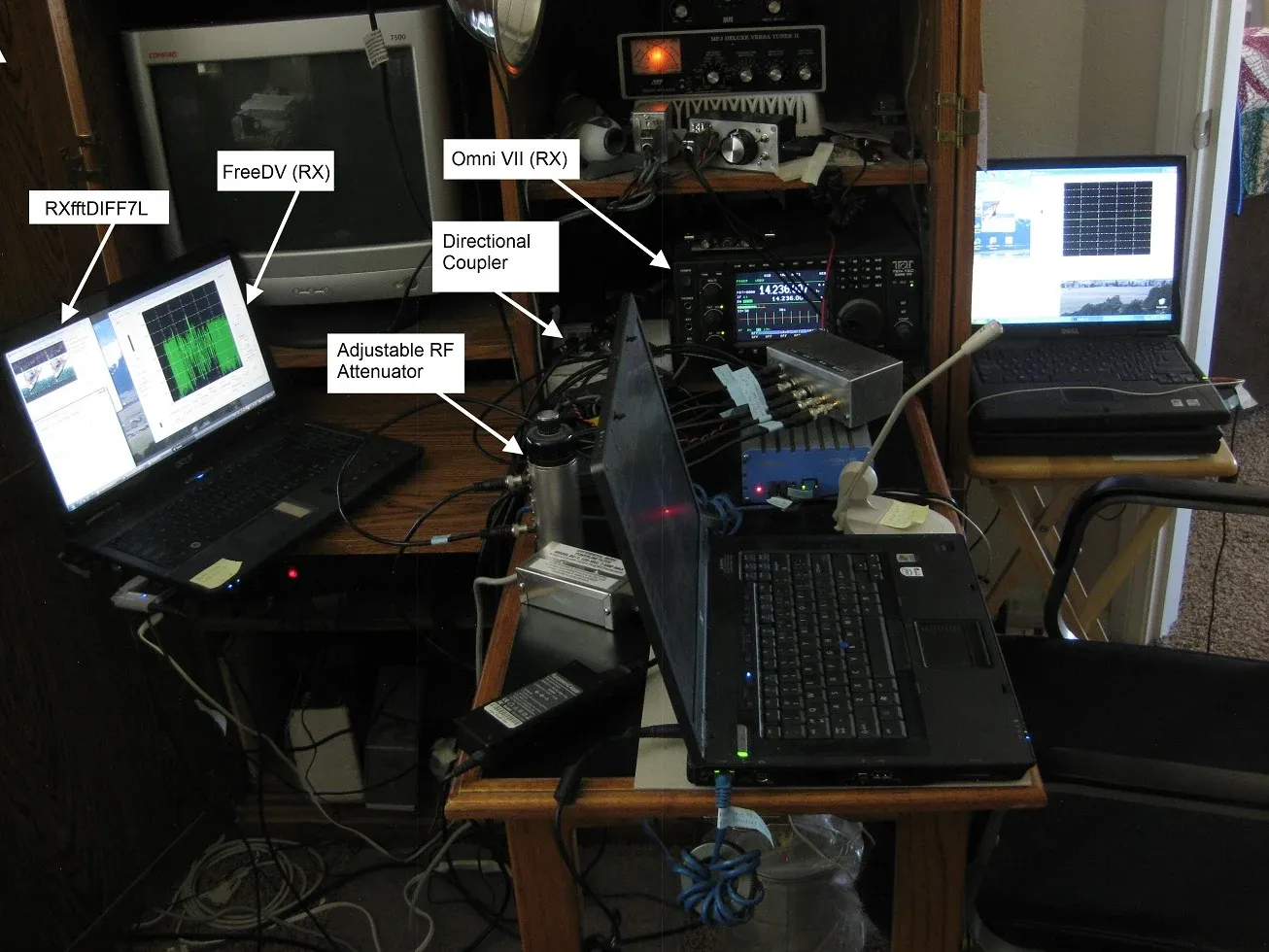
The tests will use the beta version of freedv-gui 3.0. The developers are looking for radio amateurs ready to join the testing team. Participants will work according to the testing and issue-reporting procedures prepared by the project.
This is another stage of the work carried out in 2026. Previously, RADE V2 underwent, among other things, tests using recorded signal samples, as well as work on its implementation in C and verification procedures. In July, the team was already preparing the test-phase project OTA PTT, that is, actual over-the-air radio transmissions.
RADE – Radio Autoencoder – is an approach to digital voice transmission on the shortwave bands being developed as part of FreeDV, combining machine-learning methods with conventional digital signal processing. RADE V2 remains a work-in-progress solution, so the current tests should be regarded as a stage in the development of the technology, not as the final release of a new mode.
From the perspective of radio amateurs, the transition to controlled live QSO testing. Their results are intended to provide the developers with information about RADE V2’s behavior under real propagation conditions and with different station configurations.